
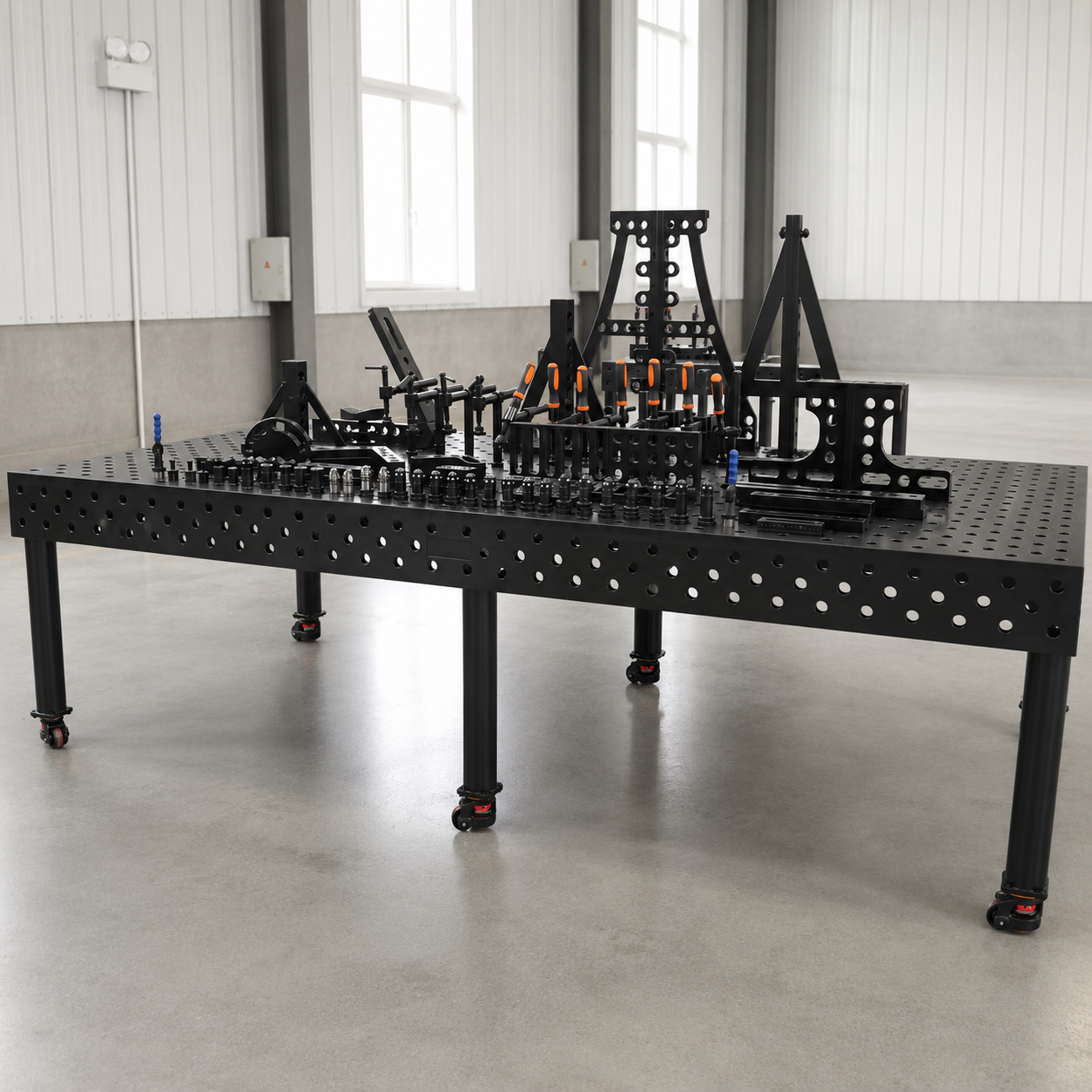
Flatness is usually one of the first things customers ask us about.
“What’s the flatness of your table?”
It’s an important question, and for our standard 3D welding tables, we control it to around ±0.1 mm/m².
But if you’re comparing two welding tables, we wouldn’t suggest making a decision from this number alone.
There’s quite a bit more going on.
We’ve seen tables that look almost the same in photos. Same size, same D28 holes, same black surface. Put the quotations next to each other and you might wonder why one costs more than the other.
Sometimes you need to look underneath to find the answer.
Turn the Table Over
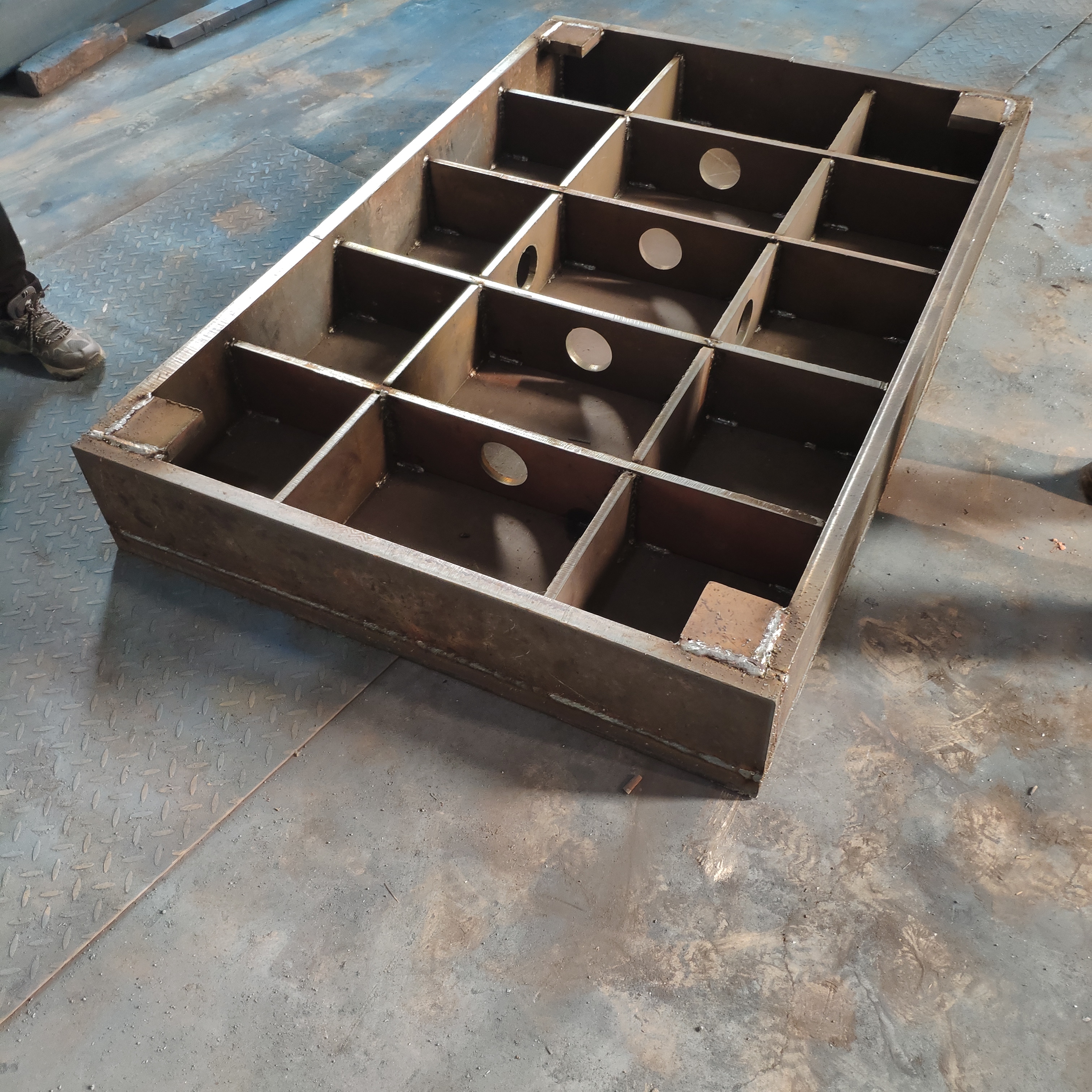
We actually think the underside of a welding table tells you a lot.
The working surface gets most of the attention because that’s what everyone sees. But underneath it, the reinforcement structure is doing a lot of the work.
A welding table has to deal with weight, clamping forces and everyday workshop use. If the structure underneath isn’t right, having a nice-looking top doesn’t help much.
This is why we spend time on the reinforcement and leg mounting structure, not just the top plate.
It doesn’t mean putting as much steel underneath as possible. More steel isn’t automatically better.
It means supporting the table properly in the places where support is needed.
So if you’re talking to a welding table supplier, ask them for a photo or video of the underside.
We would.
Then Have a Look at the Holes
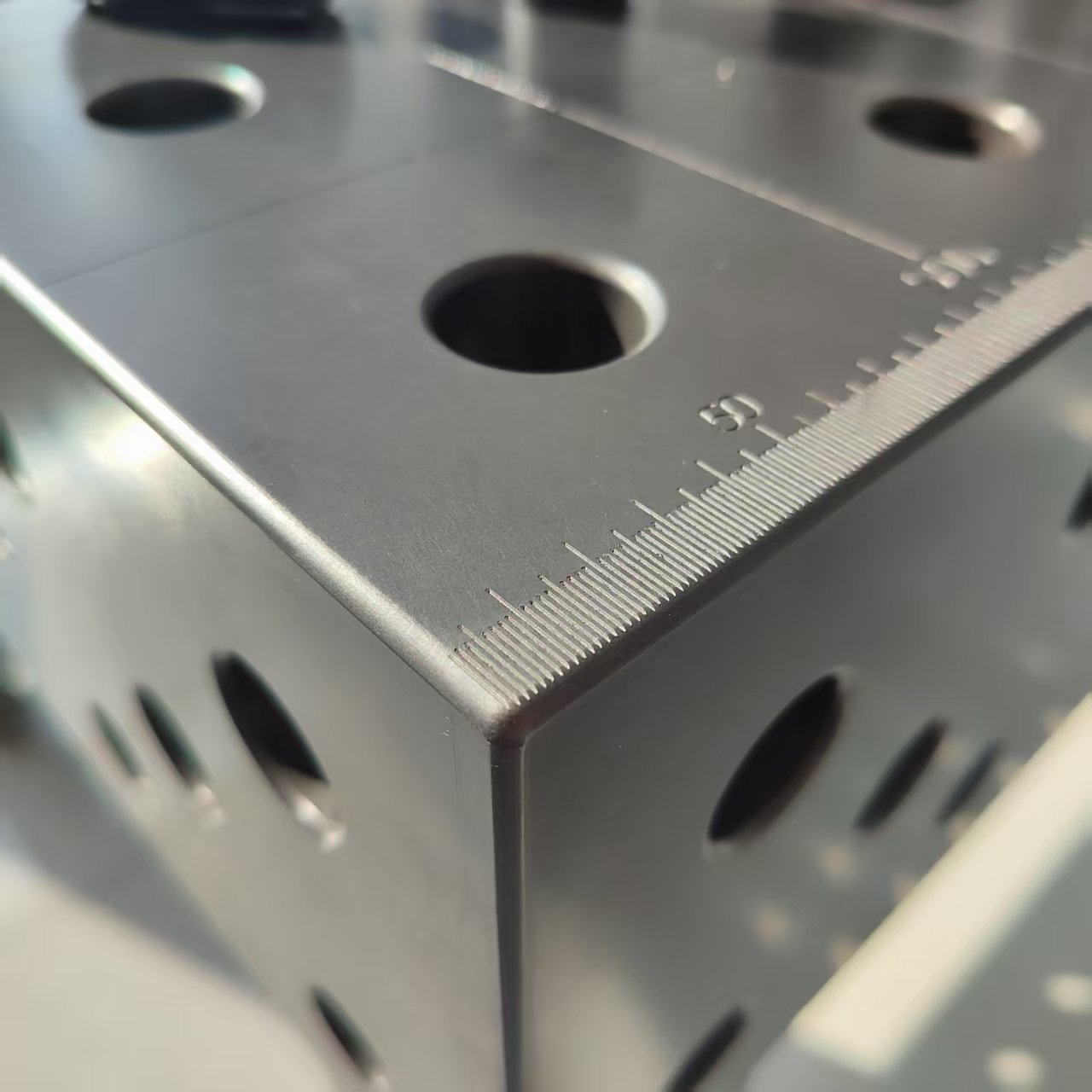
There can be hundreds of holes on a welding table, so it’s easy to think of them as just part of the pattern.
They’re not.
Every time you put in a locating pin, clamp or angle bracket, you’re relying on those holes.
For our standard D28 tables, we use Ø28 mm holes with a 100 × 100 mm grid. The working surfaces and holes are CNC machined.
What matters to us isn’t simply whether a Ø28 pin can go into the hole.
It should fit properly, and it should continue to fit properly when you move the fixture to another position on the table.
That’s when machining quality starts to matter.
A Thicker Table Isn’t Just About Looking Heavy
Our main D28 configuration uses a 25 mm working plate, normally made from Q355/S355 steel.
There are thinner welding tables on the market. There’s nothing surprising about that, and they will usually cost less.
For some work, that may be perfectly fine.
But when we’re making a table intended for heavier and regular workshop use, we’d rather start with the right material, plate thickness and reinforcement structure.
These things work together.
That’s also one of the reasons we don’t like comparing welding tables only by dimensions.
“D28, 2000 × 1000 mm” doesn’t tell you very much about how the table was actually made.
And Then There’s Nitriding
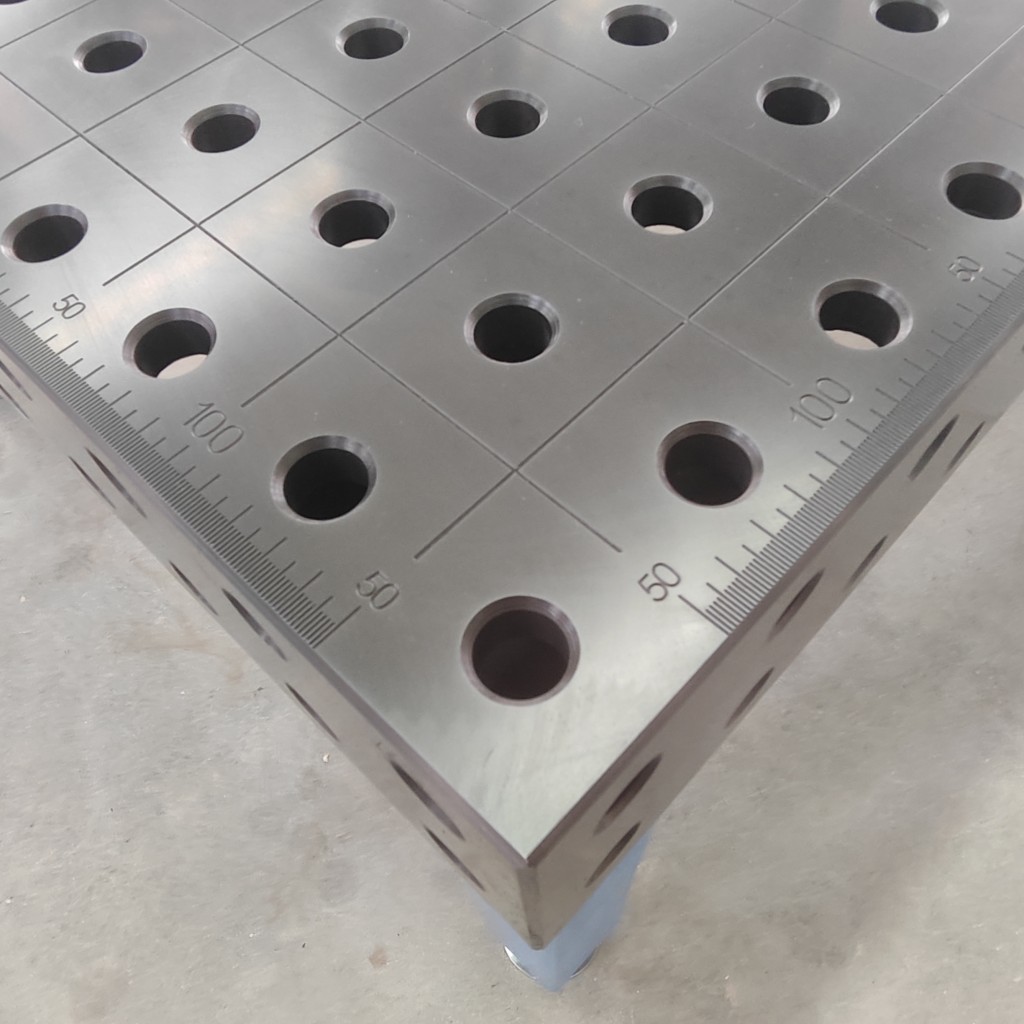
We talked about nitriding in another article, so we won’t make this one all about surface treatment.
Our nitrided welding tables normally reach around 550–600 HV surface hardness. It gives the table better wear resistance and helps with everyday maintenance.
We like nitriding.
But we’d never use it to hide the more important questions.
If the table isn’t flat, nitriding won’t make it flat.
If the holes aren’t machined properly, nitriding won’t fix them.
And if the structure underneath isn’t stable, a harder surface isn’t going to solve that either.
Make the table properly first. Then protect it.
That’s how we look at it.
The Difference Usually Shows Up When You Start Using the Fixtures
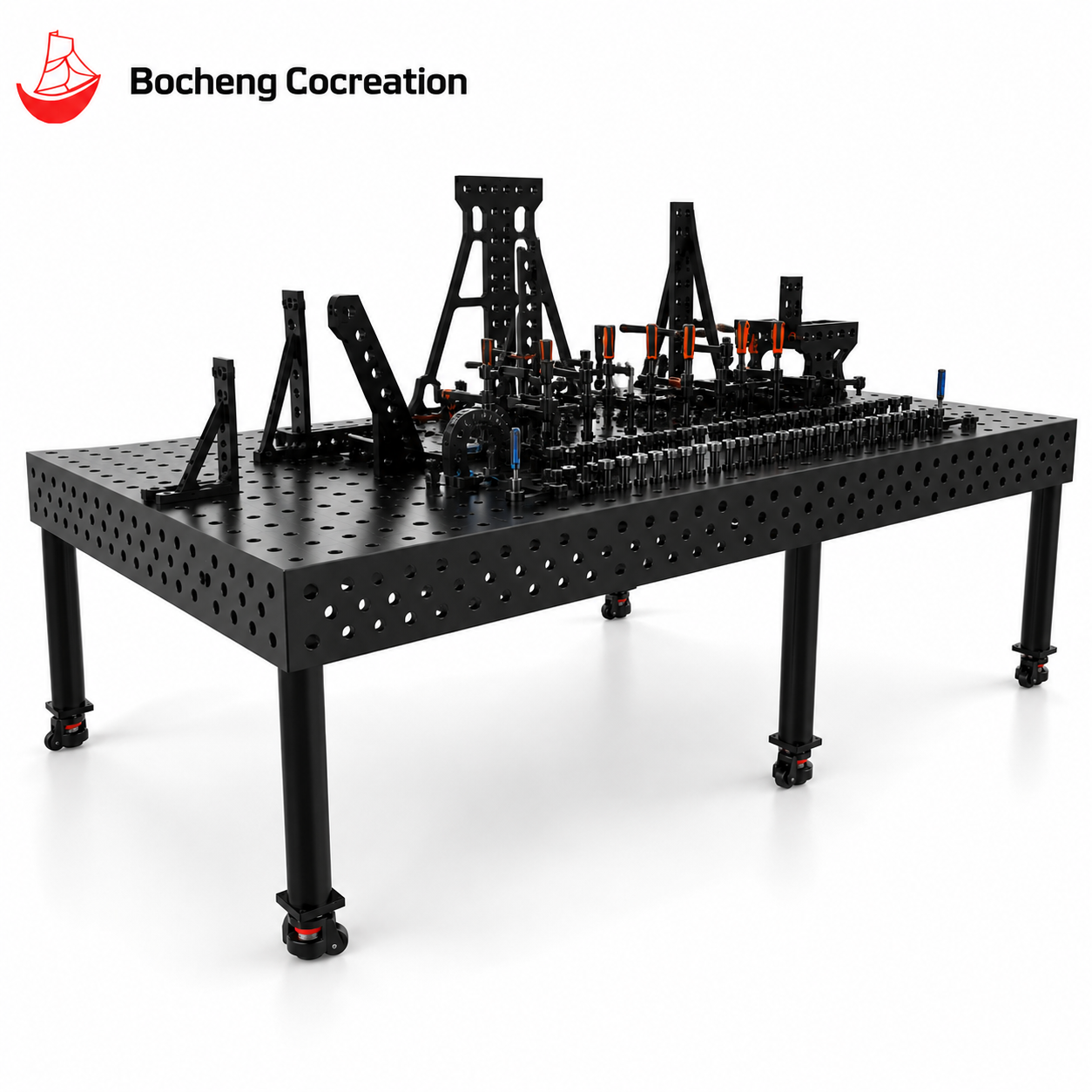
Put a bare welding table in a photo and almost any table can look good.
Start building a fixture on it and things become more interesting.
A clamp goes here. A stop goes there. An angle bracket needs to move to another position. Then the next job comes in and the whole setup changes again.
That’s what a modular welding table is supposed to be good at.
You shouldn’t have to think about whether a fixture is going to fit this hole but not the next one.
The table and the fixtures need to work as one system.
That’s why we don’t really see ourselves as making only a steel table with holes in it. The table, holes, clamps, stops, pins and brackets all have to work together.
If We Were Buying One…
We’d definitely ask about flatness.
But we wouldn’t stop there.
We’d want to know what material was used and how thick the working plate is.
We’d ask to see underneath the table.
We’d take a close look at the holes.
We’d want to see the fixtures being installed and moved around the table.
And we’d ask for actual inspection results where possible.
You don’t need twenty impressive specifications to judge a welding table.
You just need to look at the things that will still matter after you’ve been using it for a few years.
At Bocheng Co-creation, we manufacture D16 and D28 modular welding tables and fixturing systems.
If you’re comparing tables from different suppliers, you can send us the specifications you’re looking at. We’re happy to tell you what we think is worth paying attention to — even if you haven’t decided who you’re buying from yet.
Post time: Sep-14-2026